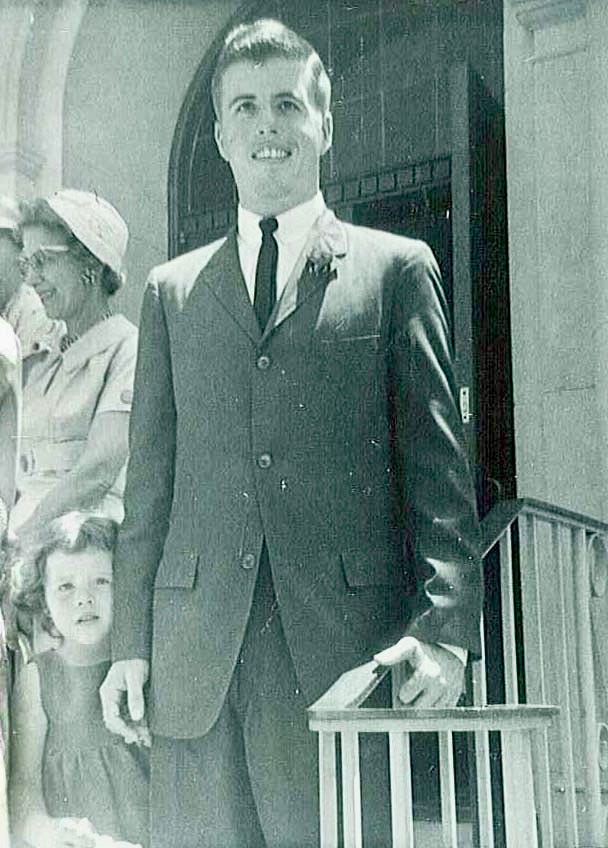


After all his abuse, I found Bud’s law practice advertisement quite amusing. And shameless.
My estranged brother Bud died last weekend. I found out when his obituary appeared in our local paper. He was 84, and we lived half a mile apart. I had not seen him in six years, not since he sat across the table making side comments at me during my deposition in the lawsuit he filed against me after our mother died.
He was a lawyer and often threatened to sue anyone who would not do what he wanted, no matter how outrageous or unreasonable. I had friends on a local non-profit board who told me he had threatened to sue them if they went through with their plan to remove the executive director, who, by all accounts, was no longer effective.
“I told myself, man, this is a volunteer position; I don’t need this,” my friend said. And several of the board members resigned. Sounds just like Bud.
In his obituary, he made a point of listing every family member, living and dead, right down to nieces and nephews he rarely saw. He did not mention me; my daughter; my late son, whom he adored and who was killed in Afghanistan in 2011; or our late sister BK, for whom he had lifelong contempt.
All my friends and family noticed the omission right off the bat. They worried it might hurt me, but I expected it. It did hurt my daughter. He had been very loving to her when she was a child, and she never did one thing to deserve his sudden ghosting more than 15 years ago. She said it wouldn’t have bothered her much if he hadn’t gone out of his way to mention everyone else.
I worshipped him when I was a child. He was fun, kind, and loving to me. He was 16 years older. He had a kindness toward children and underdogs his entire life.
When I became a teen, I felt the winds change, just as my daughter later would. I began to notice things. He treated me differently, and the loving big brother disappeared. We had some awful, unforgettable moments back then, like him dragging me to the bathroom and forcing me to wash my hair against my will. I screamed in protest while my parents and his wife watched.
He fancied himself a leader and spokesperson for his three younger siblings, though no one elected him. When things got tough among family members, he stressed that we were family and should all stick together no matter what. I tried for a long time.
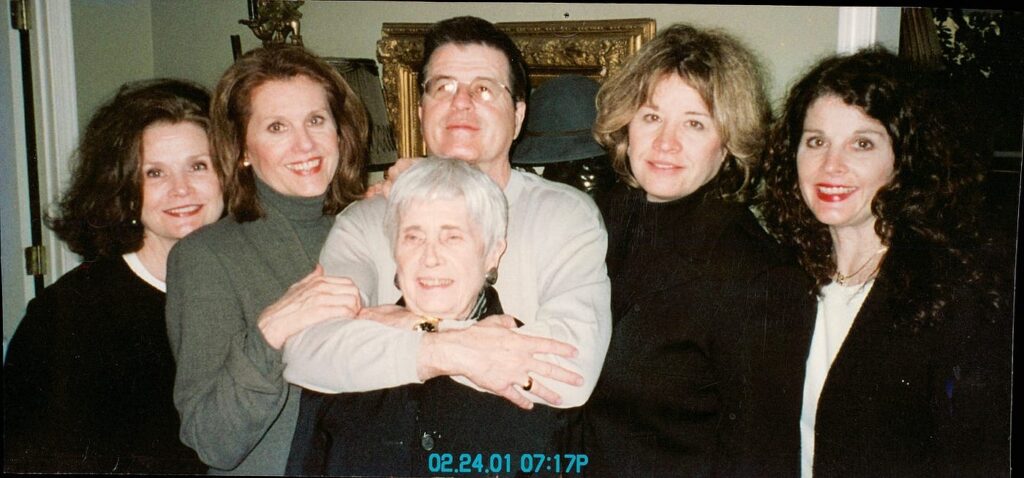
My mother and her five children when our dad died. (L-R) BK, R, Bud, mom, M, and me.
Among us siblings who were born over a 17-year period, R. was the oldest and the golden child. My brother was the second child, and second fiddle in everything he did. He had a chip on his shoulder about it. BK was the third child, and the family scapegoat. My sister M., the fourth, was the lost child and my childhood terrorist, and as the fifth child, I was the mini scapegoat. To our mother, though, I was the golden child.
So I tolerated the barbs and criticism, the humiliating stories told about me again and again, the negative assumptions, and the pigeonholing that inexplicably cast me as a ridiculous, corrupt person who couldn’t be believed, even though I had done nothing to earn it.
When I told my family in 2001 that I was going to graduate school to become a therapist, the general consensus was, “You don’t want to hear people’s problems all day, do you? Why would you want to do that?” I knew why they didn’t understand. They had no compassion or empathy for anyone.
I went far beyond anything my family thought I was capable of and earned my doctorate in 2006. At my graduation, my brother called me “Doctor Becky” in a tone laced with contempt and sarcasm. “What kind of school would give Becky a PhD?”
He never stopped ridiculing my becoming a therapist or making sarcastic remarks about my education and abilities. “How could Becky ever give anyone relationship advice?”
In public, I apologized to waitresses and shop clerks when he said inappropriate and nasty things to them. When I told him women hated it, he said, “They always smile and laugh. That tells me they like it.”
“They survive on your business and your tips,” I said. “If they told you what they really thought, they’d lose their jobs.”
“Well, so what if I’m a little inappropriate at times?”
Over the years, it became apparent that he was a person I would reject and never choose as a friend. But he was family.
His stock was on the floor with me by the time our mother died in 2020 at age 101. I was sick of his bitterness and lack of restraint and was about one nasty remark from being done.
He was 78. A day or two after our mother died, in a hostile family coup, he and my sister M., 68, tried to take control of Mother’s remaining property, all of it squeezed into a one-bedroom assisted-living unit.
He took over our first (and last) Zoom call about the estate and flatly said he would take whatever he wanted off the top. He had a well-known greed when it came to our parents’ possessions, especially their antiques, and he listed every piece of hers that would go to him and not be up for grabs.
Interestingly, he had been depossessing my parents of their things for years, and my mother had feared it. So much that she would beg me to take some of it so he wouldn’t take it. The phrase in the family about that was, “ You know how Bud is.”
The way my family saw it, I manipulated her to give me the items, most of which I did not want and kept in storage. I fully planned to give most of it back to whoever wanted it when she passed, and told them so. I just wanted to make sure Bud didn’t take it all, as my mother feared.
My sister M, his co-conspirator, would get every piece of Mother’s jewelry, Bud said. If anything was left, my wishes could be considered.
I told him, “I won’t fight you, and what you are doing is wrong. Mother would be furious with you for doing this, but if you do it, our relationship will never be the same.”
He wanted my mother’s fancy lamps, though. He had to have her huge gold mirror, and he was not open to negotiation.
The Becky who had always turned the other cheek needed to take a stand for once. When I refused to participate in any other discussions until they agreed to be fair, he went scorched-earth, launching an aggressive, vengeful campaign of sibling destruction. He visited family members and turned them against me with whatever he told them. They fell in line and ghosted me without ever reaching out to hear my side.
He sent me legal demand letters with or-else deadlines. He demanded I return everything she had ever given me so he could have it, as Mom feared. I never responded.
Finally, he sued me for the small amount of money she had left, $40,000, which I was managing. He had once managed her funds because I lived in San Antonio and he was the only child in Little Rock where she lived.
He stole $100,000 from her, the only money she had, and she went ballistic, talking about in every conversation after it happened. So when I moved to Little Rock in 2012 I told her I would take it over and protect her, and I saw myself as her protector.
We set up the new account with money her retirement home boyfriend had left her in his will, money she was justifiably terrified Bud would take. I had the right of survivorship.
Despite that, I planned to split the money with everyone when she passed away, but was holding on to it as leverage to force him to divide her belongings fairly. He never divided them at all, so I kept the money, and the things I had in storage I had planned to share.
Every probate lawyer I spoke with told me he had no case. Partnering with M., also an attorney, he tried to take me down on a legal loophole. My attorney was certain that my brother assumed that, faced with the stress, hassle, and cost, I would surrender easily. But the wounded little girl in me insisted I keep going. That fight against two siblings who had made my life hell was one of the most healing moments I have ever experienced.
I would not be bullied by them ever again, was my thinking. I could not roll over and let them win. I would not.
When I tried to raise money for my legal defense, M. reported me to the counseling board. She had also scoured every article I had ever written and watched all my online videos, and she reported me over one she thought was unethical. The board found I had done nothing unethical.
Eventually, he dropped the suit, and that was the end of us, if there had ever been an us.
After all that, I contacted a world expert and author on sibling relationships. I paid her for two sessions to see if she had any insight for me. I told her our history, and she said she knew right away what the issue was.
“Your siblings weren’t suing you,” she said. “They were suing your mother by proxy. They thought she favored you, and they punished you for it.”
I knew instantly that she was right.
It explained everything. The contempt that started when I was a teenager. The mockery of my degree. The demand that I give back every gift Mother ever gave me including the things I held for her to keep Bud from taking them. None of it was really about me. It was about her, and about the love they believed I got and they didn’t. Mother was gone, so I was the only one left to pay for it.
When I die, I will have written my own obituary. Like his, it will leave people out. I will not mention my biological family. Not one. I resigned from my toxic, fair-weather siblings, nieces, nephews, and in-laws when my brother rallied them to believe I was, I guess, a thief, and they ghosted me and supported his lawsuit. How quickly they folded when he called, even though I had been nothing but loving and generous to them their entire lives.
I’m not sure anyone in my family is capable of true bonds, attachment, or loyalty, which to me is the most valuable trait of all. You can probably see why. How could so many people in one family be so lost?
Over the years, I came to realize my family was interested in me only as long as I lived my life in a way they approved of, or got benefit from. When I grew up, got healthy, cast aside my old conformity to their harsh negativity and arrogance, and became true to myself and no longer swayed by them, they protested, gave me the cold shoulder, and fell away one by one in the most contemptuous way.
My oldest sister, R., who died of ALS in 2010, even said, “I’ve decided to wash my hands of you,” when I wouldn’t take her advice to have affairs rather than divorce my children’s dad. They liked my kid’s dad because he was a prominent orthopedic surgeon who would pick up the tab whenever we all went out for dinner.
As a therapist, I understand the dynamics, the diagnoses, the projection, and why it went down as it did. I see no need to throw the labels out now. I consider myself a survivor, the one who made it out of the toxic Sodom and Gomorrah I was raised in. I lived in it until I couldn’t. I woke up and moved on to friendlier, more loving skies. I had to, and the rest is history.
I can’t help wondering, though: What will happen to the antiques?
Dr. Becky Whetstone is America’s Marriage Crisis Manager®. She specializes in marriages in crisis, couples on the brink, and people in need of intensive marriage work. She created the marriage crisis management intervention and wrote the book “I (Think) I Want Out: What to Do When One of You Wants to End Your Marriage.”
She is the founder of Relationship University, an educational support community dedicated to teaching adults all the relationship skills our culture and families should have taught us, but didn’t. She also trains therapists in marriage crisis management.
Becky is an Amazon affiliate. If you purchase her book through the link, she may earn a small fee at no extra cost to you.